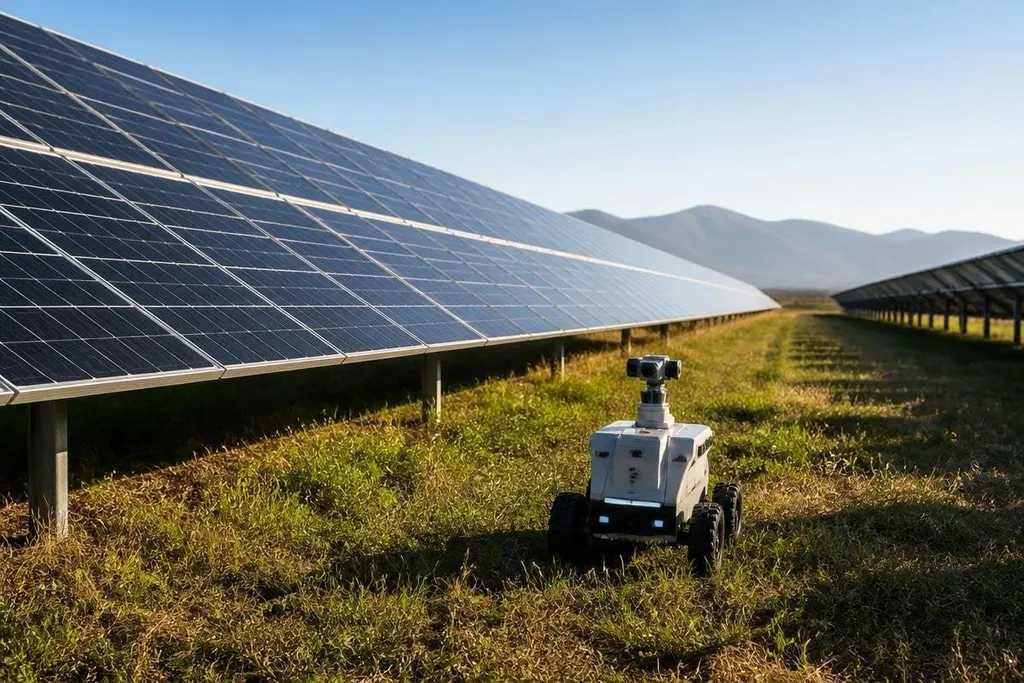
A solar farm can stretch across land that is difficult for people to inspect, clean, and patrol. That creates room for robot companies to sell repeated services around the panels, with inspection work as the clearest starting point.
- Inspection firms could use RGB, thermal, or LiDAR sensors to find faults.
- Robotic cleaning could target dust and dirt without sending workers across every panel row.
- Lease models could let farm owners pay for output instead of buying hardware.
Inspection is the first business case
A robot with an RGB camera can record visible damage, while a thermal camera can show hotter areas on a panel. LiDAR can map row spacing and ground shape, helping the robot keep a safe path between equipment.
The business opportunity sits in the report that follows the scan. A farm operator may need a list of panels to check, images tied to exact locations, and a record that shows how a fault changed over time. The robot is one part of that service; data handling and human review may bring more lasting income.
That model also gives a new company a clear place to start. It can inspect a small area, return the findings in a standard format, and charge per visit or per panel. The work still needs a human who can decide whether a hot spot means a damaged panel, a loose connection, or a temporary effect from shade.
Cleaning creates a repeat job
Dust, pollen, bird droppings, and other material can cover panel surfaces. A cleaning robot could use brushes, air, or water, but each method changes the cost, weight, and risk of the system.
Water use deserves close attention. A company selling cleaning robots may need water tanks, refill points, filters, and a plan for muddy ground. A dry brush system may reduce that equipment, but it could leave material on the panel or scratch a surface if its contact force is poorly controlled.
The strongest offer may be a service contract tied to site conditions. A farm with little dust may need occasional work, while a site near a dry road may need more visits. Without site records, a fixed cleaning schedule would be a guess dressed up as a plan.
Security and vegetation work need different robots
Solar farms also have fences, access roads, cable runs, and tall vegetation. A ground robot could patrol set routes with cameras, while a separate machine could cut or check plants near panels and electrical equipment.
Those tasks sound related because they happen on the same land. The hardware needs are different, though. A patrol robot needs reliable detection, a safe stop, and a way to send an alert. A vegetation robot needs tools, force control, and rules that keep it away from cables and panel frames.
This is where a fleet service could make sense. One company might supply several robot types, charge for scheduled visits, and send a technician when a machine needs repair.
The hard part is keeping the machines working outdoors, where heat, dust, rain, slopes, and uneven ground can affect sensors and drive systems.
Outdoor failures can erase a robot’s labor savings. Managers comparing solar farm systems can use reports on field robotics from Robot24.com to check each machine’s task, test site, date, and measured result before judging the software business that follows.
Software may outlast the hardware sale
A solar farm robot produces location data, images, thermal readings, and work records. A software service could turn those files into maintenance tasks, map repeat faults, and show which parts of a site need another visit.
That service needs a clear link to the operator's work. A report that only stores images may not change a repair decision. A report that assigns a panel row, records the fault type, and shows the last inspection gives a technician a usable starting point.
The unproven part is the same across many ideas in this field: whether a robot can work long enough outdoors without frequent human rescue. A short demonstration on a clean panel row says little about wet ground, blocked routes, damaged fencing, or a sensor covered in dust.
A practical starting check
Before paying for a pilot, a solar farm operator should ask:
- Task definition: Which job takes the most staff time or creates the clearest maintenance delay?
- Site access: Can the robot reach every row, road, fence, and service point it needs?
- Sensor proof: Does the system record images or readings that a technician can act on?
- Human work: Who reviews alerts, moves the robot, and handles recovery when it stops?
- Payment model: Is the charge based on visits, panels checked, cleaning work, or software access?
- Failure plan: What happens when rain, dust, slopes, or a blocked route stops the machine?
I'd start with inspection because it can produce a useful record before the company takes on brushes, cutting tools, or water systems.
The next business worth testing is the one that turns a robot visit into a repair decision, with a clear cost for each site and a human ready when the route breaks.